


The value chain
Across the asset manager, wealth manager and platform clients we work with, we see a range of strategies to maximise the value of product sets and gain additional access to customers.
- Asset Managers – Wealth strategy (albeit typically only the larger managers)
- Platforms – DFM strategy
- Wealth managers – Asset management/platform strategy
Advantages of Vertical Integration
There are two key advantages of vertical integration that firms should consider:
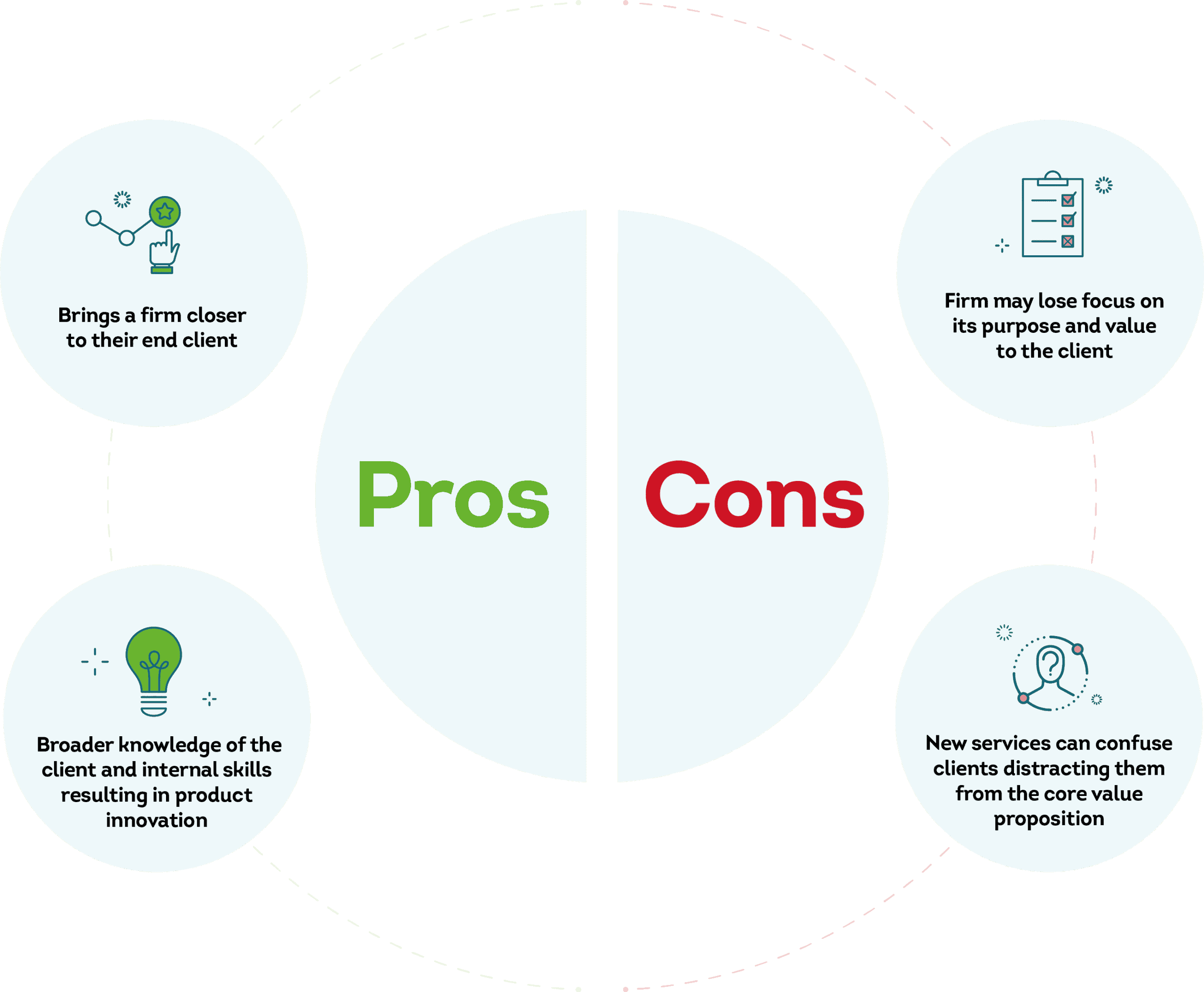
Proximity to the end customer
By offering more services and reducing the number of firms the end customer needs to engage with, vertical integration can increase revenue for the integrated firm while passing savings achieved through economies of scale and time efficiencies to the end-client. Additionally, firms will be able to take a more holistic approach to client relationship management across the lifecycle.
Drives innovation
Through increased ownership of customer touchpoints, vertical integration can facilitate the creation of customised in-house solutions. Vertical integration works best when the skillset and knowledge to operate integrated firms are similar, with sizable cross-sell potential.
Disadvantages of Vertical Integration
There are two key disadvantages of vertical integration that firms should be wary of:
Detracts focus away from a firm’s purpose
Firms can lose sight of what their clients truly value. A race to own suppliers or more of the value chain can lead to the perception that a firm ends up becoming a “Jack of all trades, master of none,” materially eroding client confidence and new business potential.
Confuses clients
Firms need to be famous for something and the best can concisely explain their unique selling point (USP). Having too sprawling a range of services or products can confuse clients and reduce strategic cohesion.
Benefit Overview
Divestitures
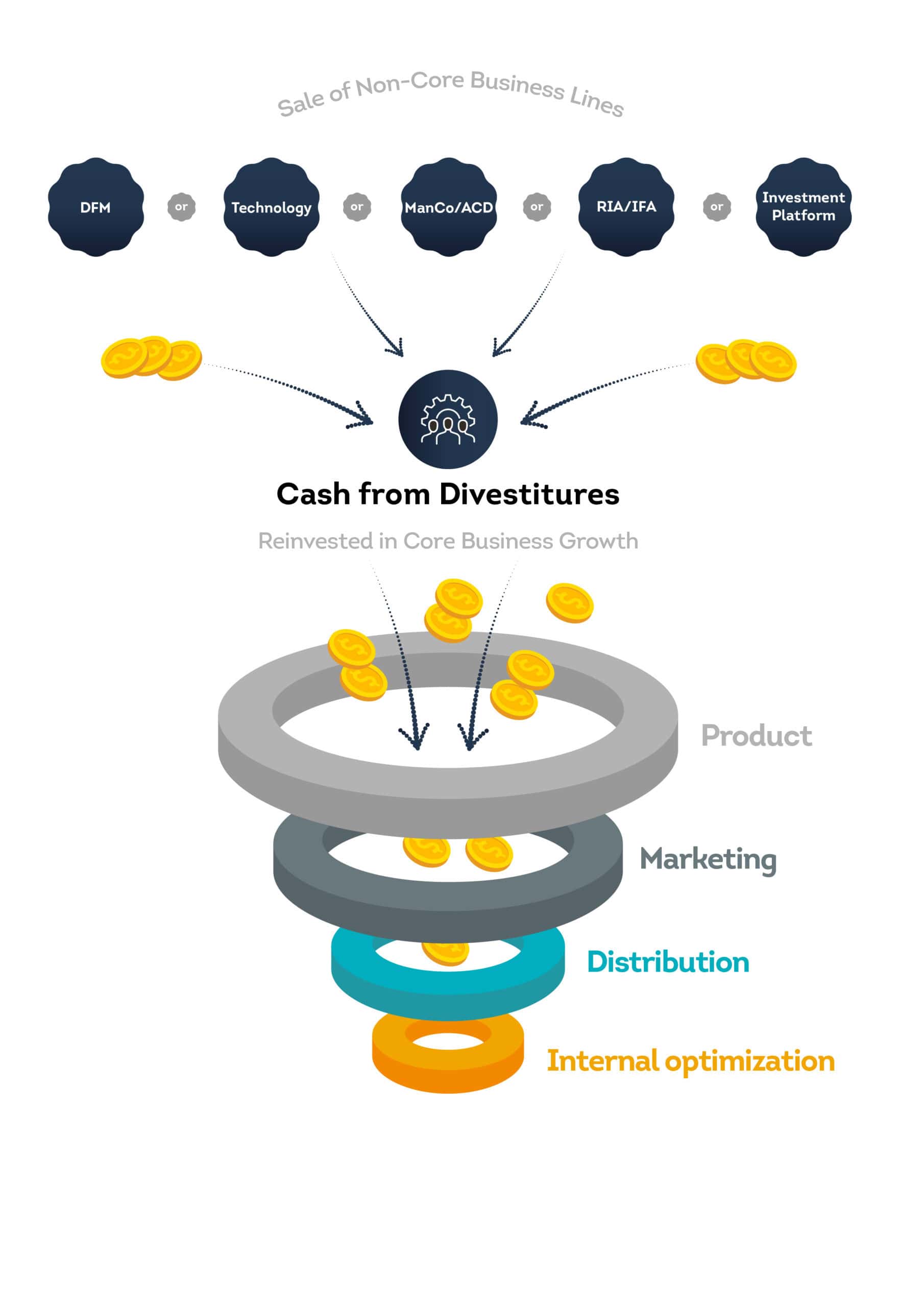
Vertically integrated firms have an opportunity to shed less attractive business units and reinvest in product, marketing, distribution, and internal optimisation efforts.
It’s time for firms to view their business units through a critical eye and assess them against the following tests:
- Does the business unit require investment to grow materially?
- Is there significant uptake of the service, and is there a material level of cross-selling?
- Does the business operate in a strategic geography?
- Could the proceeds of a sale enable significant growth in another business unit or an alternative strategy?
We often see firms making divestitures of businesses that they only recently acquired themselves – which begs the question: What has gone wrong in these cases?
It is likely that the intersection of strategy, execution and culture between the acquirer and the target did not align as expected. Management time is valuable, and firms need to be cautious about wasting it with failed acquisitions. Investing more time into establishing strategy, execution planning and bringing a culture assessment into the due-diligence process during the transaction phase can lead to multifold savings down the line.
How can Alpha help?
A strategic review sheds light on areas of your business that might be suitable for divestiture while identifying new areas for expansion. Our strategy and M&A support brings market insights from SMEs dedicated to the sector. To learn more or speak to one of our experts, please reach out to Alpha.