


Performance and attribution teams have spent the last few years fixing their data. The next few years will not only be about proving they can keep up, but also add value. Alpha’s 2026 Performance & Attribution Pulse Poll showed that while the function is becoming more reliable, it is not becoming any more responsive. At the center of that gap sits one long-running architectural question: which Book of Record should actually drive your numbers.
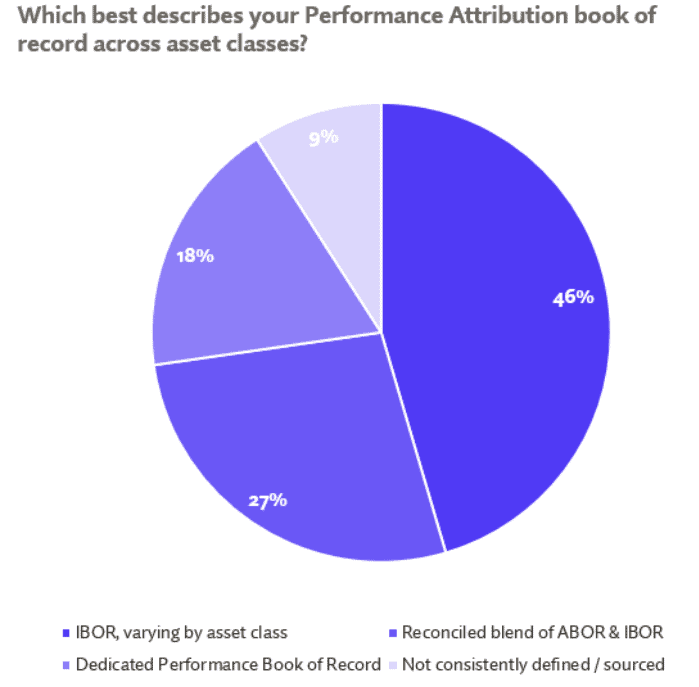
For most firms, it is less a deliberate choice than a product of legacy technology, investment strategy and constrained resourcing. Only 18% of respondents run a dedicated Performance Book of Record. Nearly half are still working from an Investment Book of Record that varies by asset class, of which 9% admit theirs is not consistently defined or sourced. That inconsistency quietly drives much of the manual effort, inflexibility and client-facing risk Performance & Attribution teams wrestle with today.
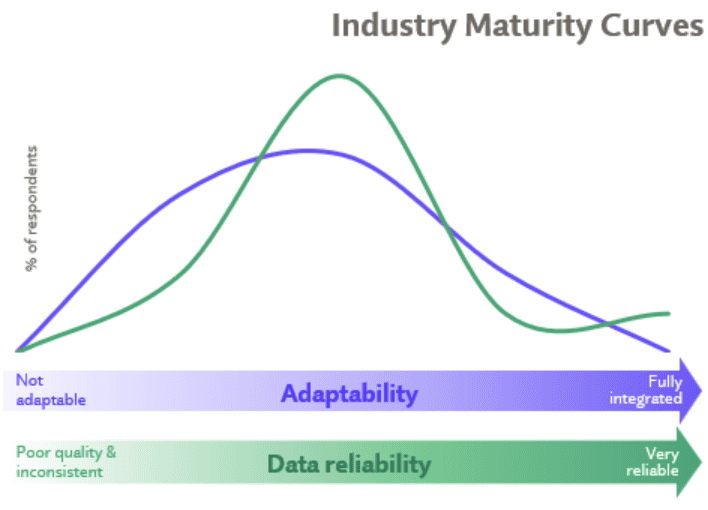
“Only one respondent to our poll reported both strong data reliability and high functional adaptability. Most firms are still trading one for the other.”
Why the Book of Record Question Matters more than it Used to
A Book of Record was once seen as a back-office housekeeping decision. That is no longer the case. Today, it shapes how quickly a Performance & Attribution team can respond to a new mandate, how closely its numbers align with the front office view in the PMS or OMS, and how confidently those numbers can be defended when challenged by a client or regulator.
Three flavors dominate the conversation:
- ABOR (Accounting Book of Record): the accounting-based record of transaction value on a settled basis – reliable and auditable, but not built for front-office speed.
- IBOR (Investment Book of Record): a near real-time, position-level record that reflects the portfolio as the front office sees it intraday, including trading activity down to lot level. More granular and timely than ABOR, it focuses on transaction timing and flags trade data as settled or unsettled, however. carries less official weight.
- PBOR (Performance Book of Record): a dedicated, calculated performance and attribution track record, held and governed as an asset in its own right rather than derived on demand, together with the analytics behind it.
The Market is Moving from ABOR-led to IBOR-led, with PBOR as the Next Step
The direction of travel is clear, even if adoption is patchy. Firms are increasingly building performance calculation on an IBOR foundation, which supports bottom-up calculation and much closer alignment with the PMS and OMS systems the front office already relies on. ABOR is still blended in, typically as the source of truth for “official performance” at month end, ensuring the custodian-accounting numbers reconcile with what has been reported. It is less ABOR versus IBOR than a decision about which one leads and which one checks.
The Performance Book of Record is the next step on that maturity curve. Rather than recalculating performance and attribution from source data each time it is needed, a PBOR holds it as a governed, historical track record. That record has traditionally sat inside a dedicated performance and attribution system; what is changing is that some firms are now building PBOR capability directly into their data warehouse or data platform, so they can stitch, analyze and report on the data more dynamically, with less dependence on a third-party P&A supplier’s release cycle, rigid reporting layer and occasionally expensive cost model.
That shift matters strategically as much as technically: performance and attribution data stops being something you request from a system and becomes something you can query, model and repurpose like any other data asset.
So why is adoption still patchy? Rarely because the vision is unclear. Typically, it’s because the cost of change is visible and upfront while the value seems more implied to those outside of the day-to-day: fewer reconciliation breaks, faster mandate onboarding, client questions answered without waiting on a vendor release. Firms that get investment approved for a PBOR have been able to quantify the value and efficiencies it brings enterprise-wide. Until the case is made in those terms, the shift looks optional to anyone outside the P&A team.
What Actually Drives the Choice of Book of Record?
This is not black and white, and firms that treat it as a one-size-fits-all decision tend to over-engineer it. In practice, a handful of factors shape the choice:
- Asset class mix and complexity: firms running multi-asset or alternatives portfolios feel asset-class-by-asset-class IBOR variation far more acutely than single-asset-class managers — much of why 46% of respondents run a split IBOR rather than a single firm-wide record.
- Front-office alignment pressure: the closer performance needs to match what portfolio managers see intraday in the PMS or OMS, the stronger the pull towards an IBOR-led model.
- Client and regulatory reporting obligations: GIPS compliance and custodian reconciliation requirements keep ABOR relevant as the anchor for “official” performance, even in IBOR-led firms.
- Legacy technology and vendor dependency: 36% of respondents cite scalability issues with legacy technology as a top challenge, shaping appetite for building PBOR capability in-house versus staying reliant on a third-party P&A system.
- Build versus buy appetite and data platform maturity: firms with a genuine enterprise data warehouse strategy are the ones experimenting with warehouse-native PBOR; those without one are understandably in no rush.
What We See Working Best, and Why?
A few patterns separate firms making real progress from those still stuck reconciling spreadsheets:
- Treat Book of Record strategy as a governance exercise, not a P&A project. The poll’s biggest gap is not technical, it is the 27-point difference between firms that want better master data (73%) and those that recognize the cross-functional governance needed to sustain it (46%). A Book of Record owned solely by the P&A team rarely survives contact with the front office, risk and data teams that touch the same data.
- Pair any move to PBOR with a genuine master data strategy. A dedicated PBOR built on inconsistent source data just gives you a more confident-looking version of the same problem.
- Be honest about what “IBOR” means in your firm today. Plenty of firms describe themselves as IBOR-led while running partial integration and manual workarounds behind the scenes. That gap between stated and actual maturity is why only 18% rate themselves highly adaptable. Third-party providers remain central to alternatives operations, but outsourcing a process does not outsource responsibility for the client experience.
How Can Alpha Help?
- Has your Book of Record evolved into something that no longer works strategically?
- Do your front office and your P&A team work from numbers that reconcile?
- Does every data strategy conversation stall on governance?
If any of this sounds familiar, you’re not alone – it is what this year’s Pulse Poll found across the market.
Alpha helps Performance & Attribution and data teams benchmark their Book of Record strategy against the market, define the right target state for their asset mix and client base, and build the governance that makes it stick.